Foundation Park Is Growing — Is Your Security Ready?
QUICK ANSWER
Foundation Park in northwest Sioux Falls, SD is now South Dakota's largest industrial growth zone, anchored by a
$1.3B Smithfield Foods pork processing facility announced February 2026 and a
700,000 sq ft CJ Schwan's frozen-food plant already under construction.
SMP Security has served the Sioux Empire for 70+ years and specializes in industrial and food production facility security — the exact profile of every incoming Foundation Park tenant.
This guide covers what Foundation Park operators need in place before operations begin: guard deployment, access control, patrol coverage, and TrackTik compliance documentation.
SMP Security offers free security assessments for Foundation Park facilities — call (605) 334-9357 or request at smpsecurity.com/contact
The phone calls started before the concrete was poured.
When Smithfield Foods announced its $1.3 billion pork processing facility at Foundation Park on February 16, 2026, procurement conversations across the Sioux Falls industrial market shifted overnight. Site work begins spring 2026. CJ Schwan's broke ground on a 700,000-square-foot frozen-food plant at the same complex in November 2024, with production targeted for 2027. The security questions — access control, guard deployment, perimeter patrol, construction site coverage — are live decisions now, not future ones.
Foundation Park industrial security in Sioux Falls is a different challenge than a typical commercial building. The facilities are larger, the compliance requirements are stricter, the workforce is bigger, and the operational risks are specific to food production and heavy industrial environments. What a facility director needs from a security vendor at Foundation Park is not what works for a retail strip or an office campus.
SMP Security has operated in the Sioux Falls market for 70+ years. We've covered industrial facilities, food plants, and large-footprint campuses across the 150-mile Sioux Empire radius. This guide is for incoming and existing Foundation Park operators who are thinking through what a real security program looks like before doors open.
Is your Foundation Park facility in the planning stages?
Schedule a free site assessment now — before buildout is complete
What Is Driving the Foundation Park Expansion
Foundation Park sits at the intersection of I-29 and I-90 in northwest Sioux Falls — a location that makes it the most strategically positioned industrial zone in the upper Midwest. The combination of interstate access, rail access, available land, and South Dakota's business-friendly environment has attracted a concentration of food production and logistics investment unlike anything the state has seen before.
The
Smithfield Foods investment — $1.3 billion in a state-of-the-art pork processing operation spanning more than 1.4 million square feet — is the largest single private investment in South Dakota history.
CJ Schwan's 700,000-square-foot Asian food production facilityis already under construction at the same complex, with production expected in 2027. These are not speculative projects. They represent a permanent shift in the scale of industrial activity at Foundation Park.
What that means practically: Foundation Park is about to become home to thousands of employees, hundreds of vehicle movements per day, multiple access points across large perimeter footprints, and the kind of 24/7 operational complexity that doesn't forgive a weak security program. The security infrastructure for these facilities needs to be in place before production begins — not retrofitted after the first incident.
Why Food and Industrial Facilities Have Different Security Requirements
Foundation Park industrial security in Sioux Falls is not a commercial property problem. It's a food production and heavy industrial problem, and the distinction matters.
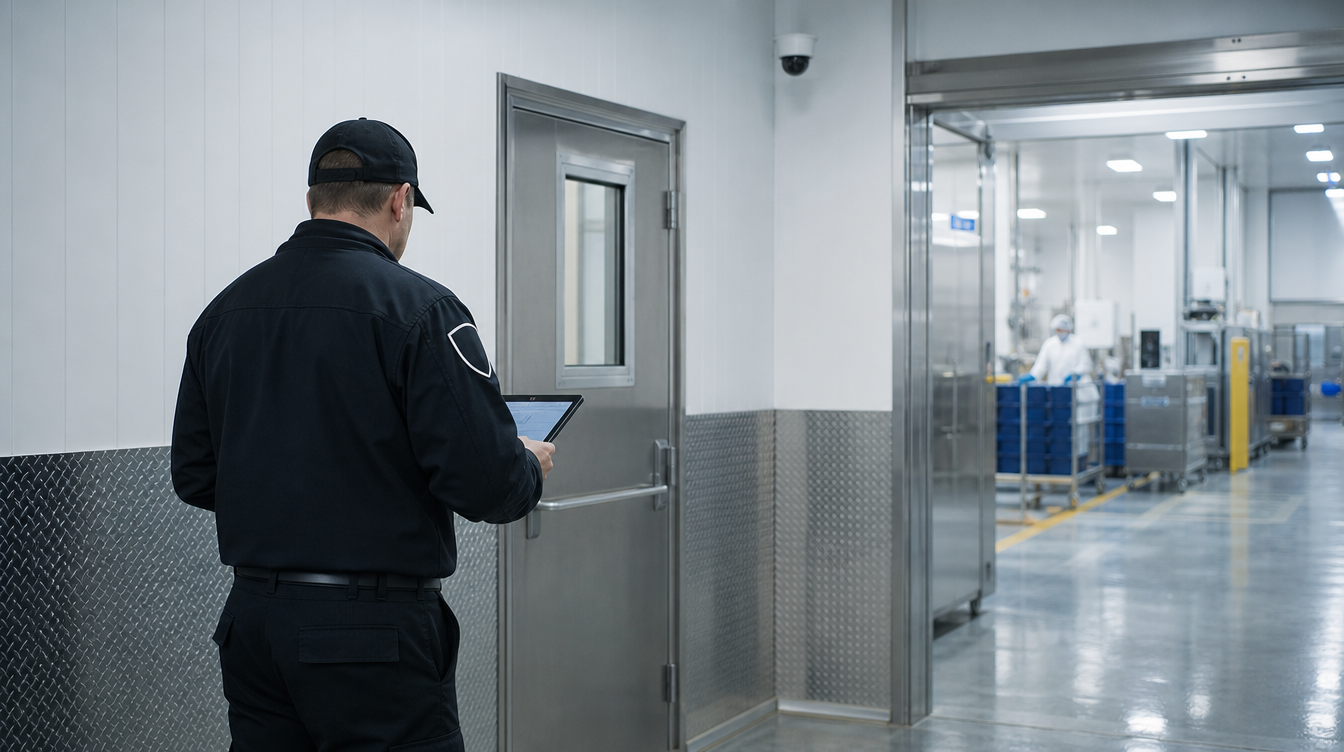
Food production facilities operate under FDA oversight. FSMA compliance — specifically the Hazard Analysis and Risk-Based Preventive Controls framework — requires documented physical security controls. That means access logs, perimeter checks, and incident records that hold up under an FDA inspection walkthrough. A guard company that can't generate that documentation isn't serving a food plant's real security needs, regardless of how many guards they deploy.
Industrial facilities at the scale of Smithfield and CJ Schwan's also carry insider threat exposure that standard commercial buildings don't. Ingredient theft, trade secret exposure, contamination liability from unauthorized access to production areas — these are material risks with direct regulatory and financial consequences. The security program has to be built around those specific threat vectors, not adapted from a retail or office framework.
The access control requirements are also different. A food production facility has multiple zones — administrative areas, production floors, cold storage, loading docks — each with different access authorization levels. Managing those zones requires a vendor with the technology and protocols to enforce them consistently across multiple shift changes.
- Access logs and patrol records tied to FDA documentation requirements
- Zone-level access control across production, storage, and administrative areas
- Insider threat protocols specific to food production environments
- Shift-change coverage — the highest-risk periods for unauthorized access
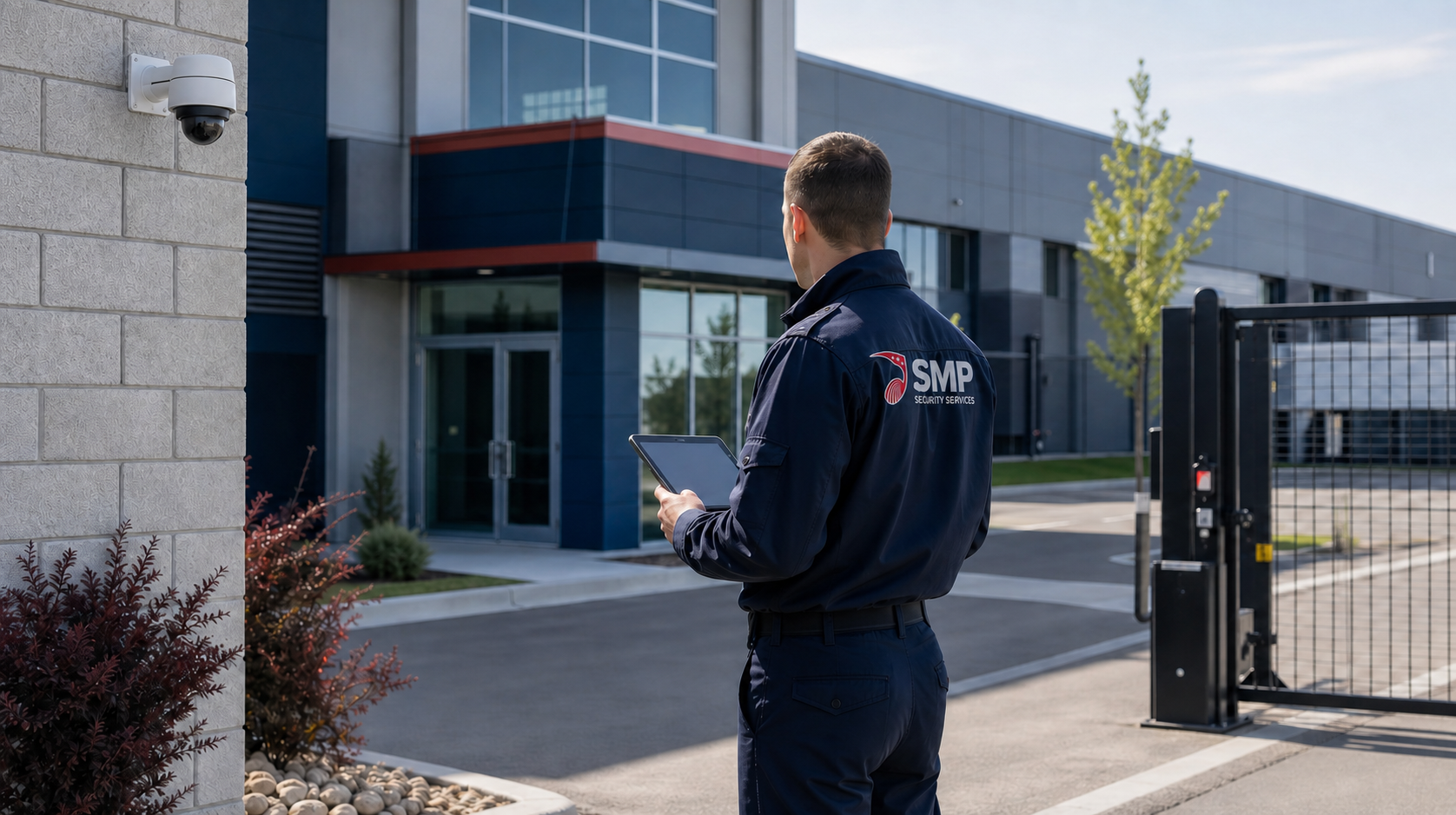
- Perimeter patrol across large industrial footprints
Does your Foundation Park facility have different security zones?
SMP Security designs coverage programs around your layout — not a generic template
The Security Risks That Come With Large-Scale Construction and Ramp-Up
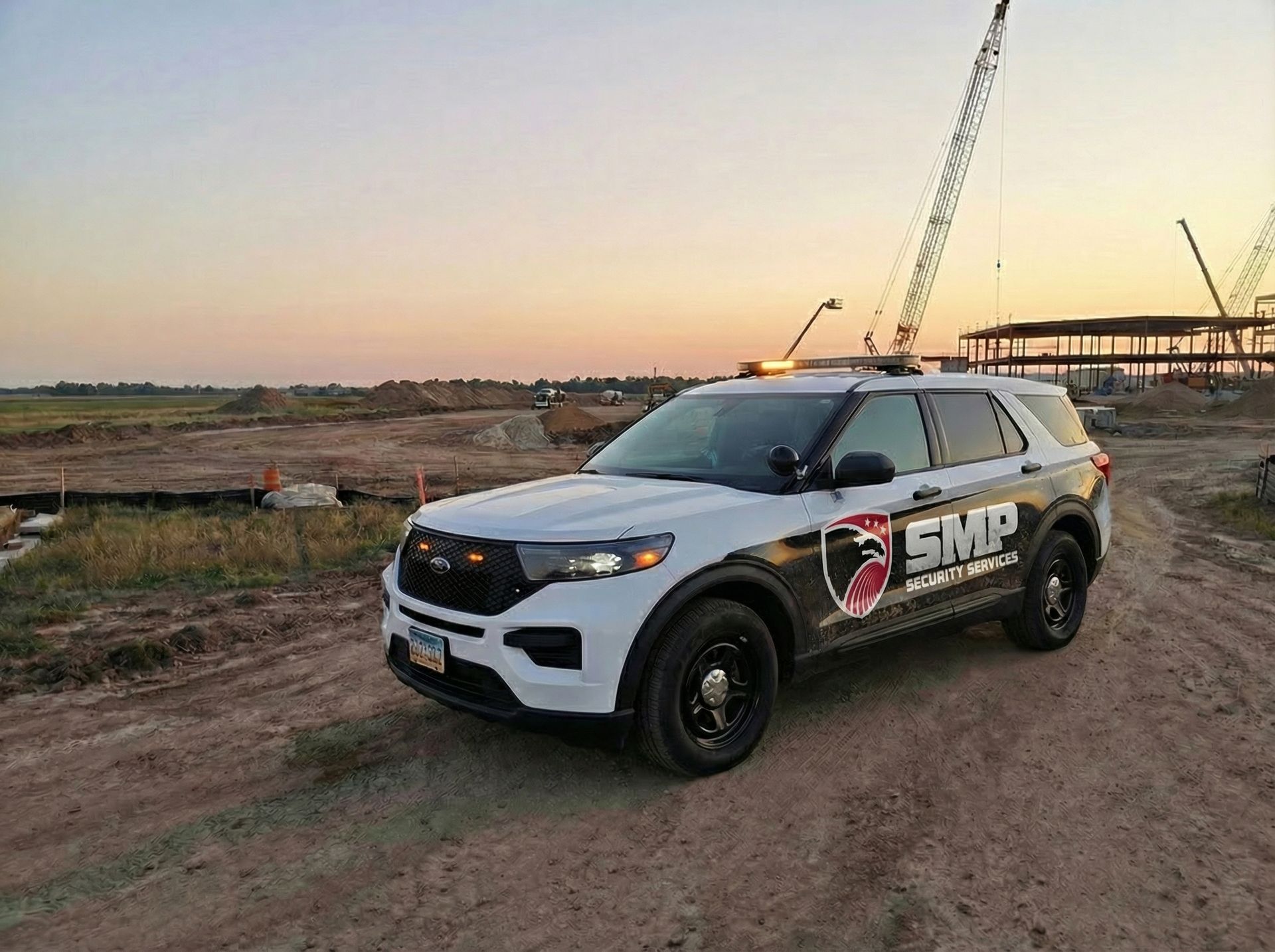
Most Foundation Park tenants will face a security gap that's easy to underestimate: the period between groundbreaking and full operations. Construction sites are high-risk environments, and the Sioux Falls industrial corridor has seen that play out before.
Construction site security at a facility of this scale involves equipment theft, material loss, after-hours trespassing, and liability exposure from unauthorized access to active worksites. The cost of replacing stolen copper wiring or heavy equipment is significant. The cost of a liability incident on an unsecured site can be far higher.
The ramp-up period — when a facility has partial staffing, new employees still in training, and security protocols that haven't been tested at full operational load — is a second exposure window. This is when procedural gaps show up and when a security vendor with food production experience becomes the difference between a documented incident and an undocumented liability.
SMP Security's approach to construction and ramp-up coverage uses mobile patrol,
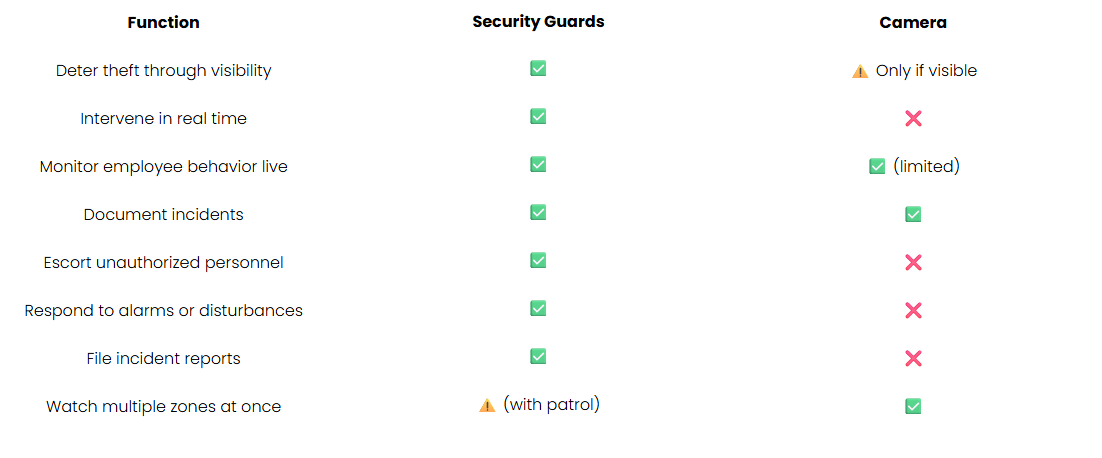
virtual guarding, and on-site personnel in combination — a layered program that adjusts as the facility moves from construction through commissioning to full operations. Every patrol checkpoint is logged through TrackTik, creating a timestamped record from day one.
What Foundation Park Tenants Should Have in Place Before Operations Begin
The time to build a security program is before the first shift, not after. For incoming Foundation Park operators, these are the elements that need to be in place at operational launch:
Access Control Infrastructure
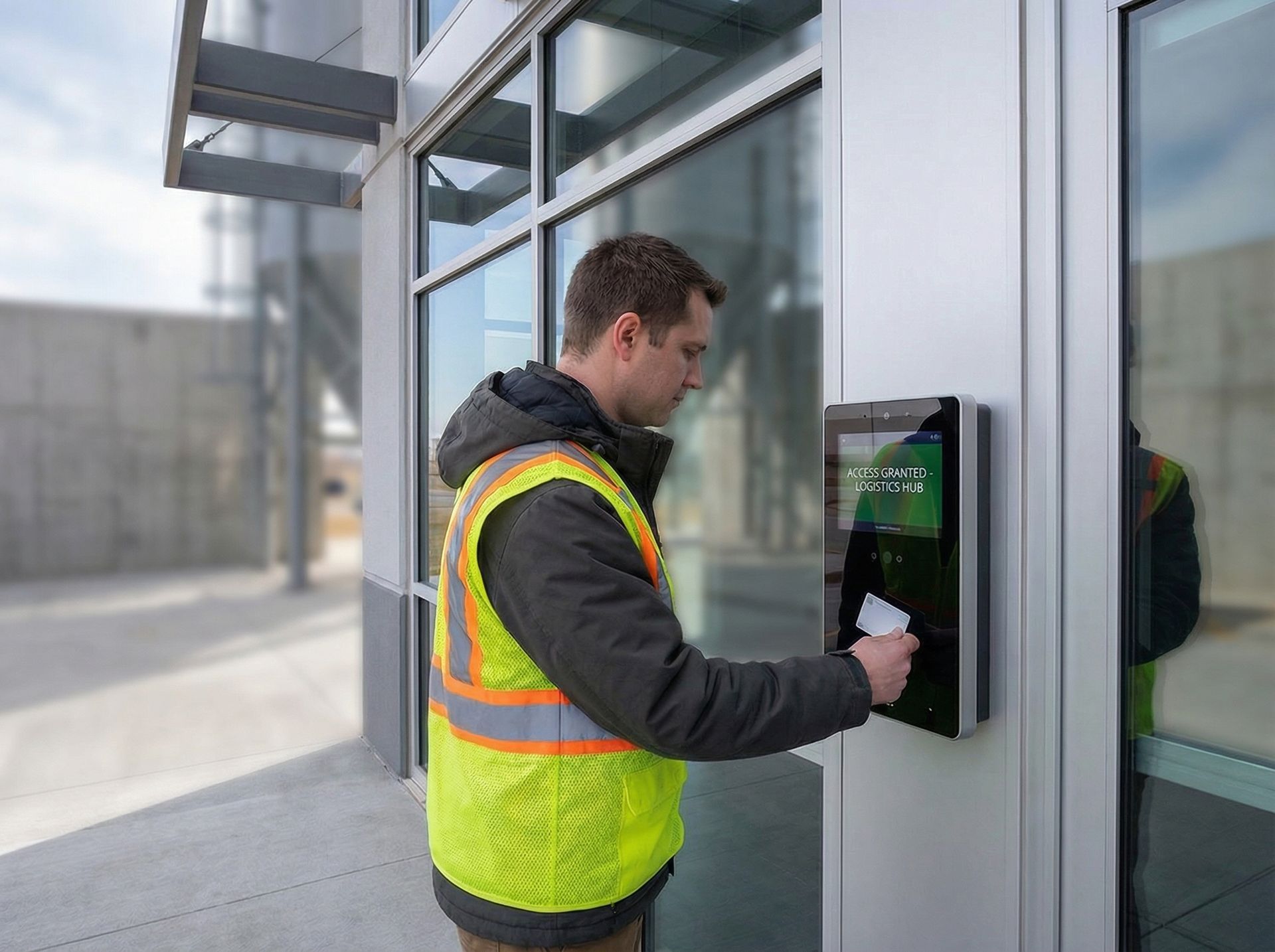
Zone-based
access controlwith electronic credentials should be installed during construction — not retrofitted after occupancy. Every entry point to production areas, cold storage, and loading docks needs to be controlled and logged. The system should integrate with your workforce management tools so that terminated employees' access is revoked in real time.
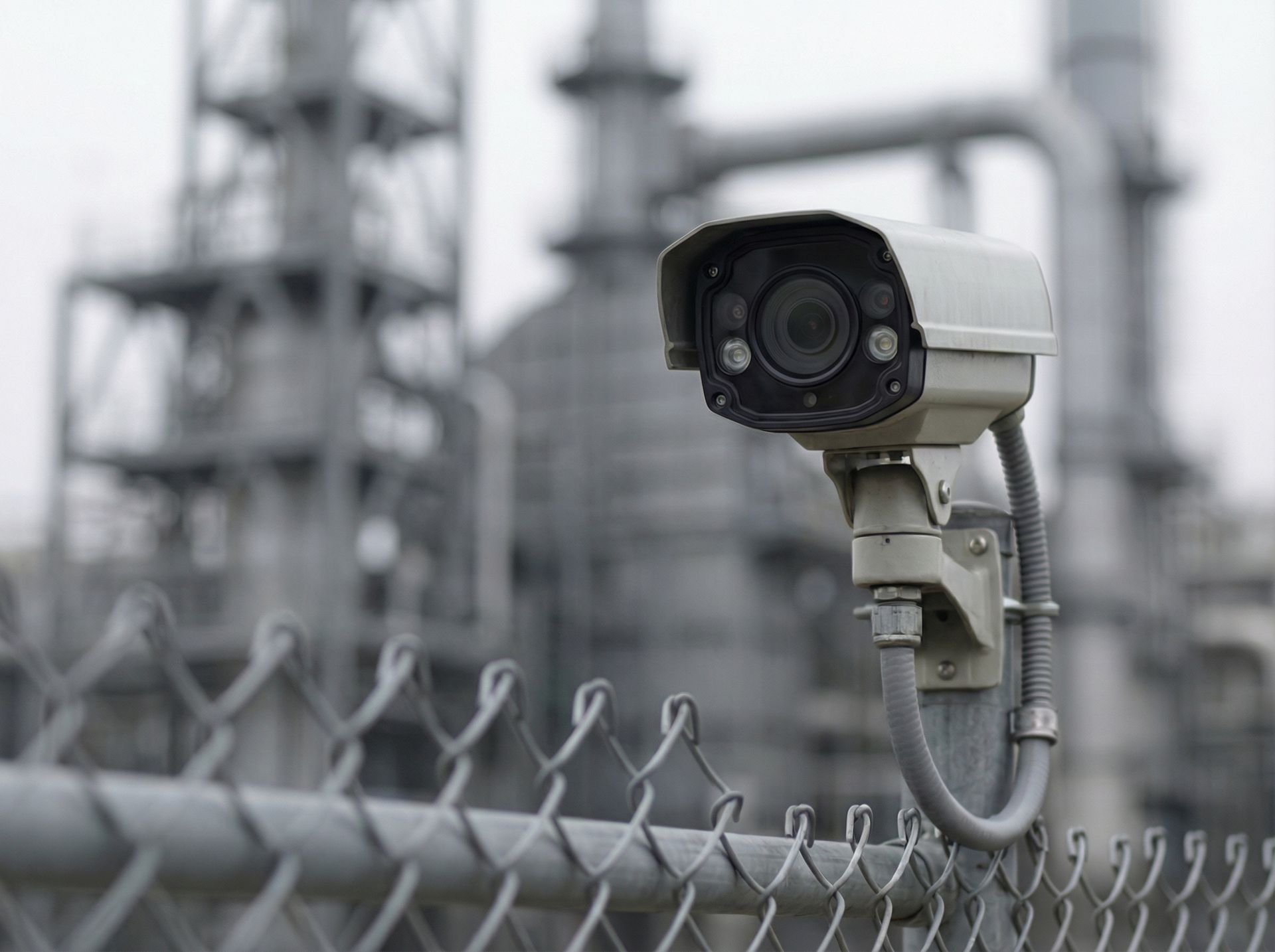
SMP Security installs and monitors access control systemsfrom $10,000 — integrated with CCTV and patrol management through TrackTik.
Guard Deployment and Shift Coverage
Food production facilities running multiple shifts need
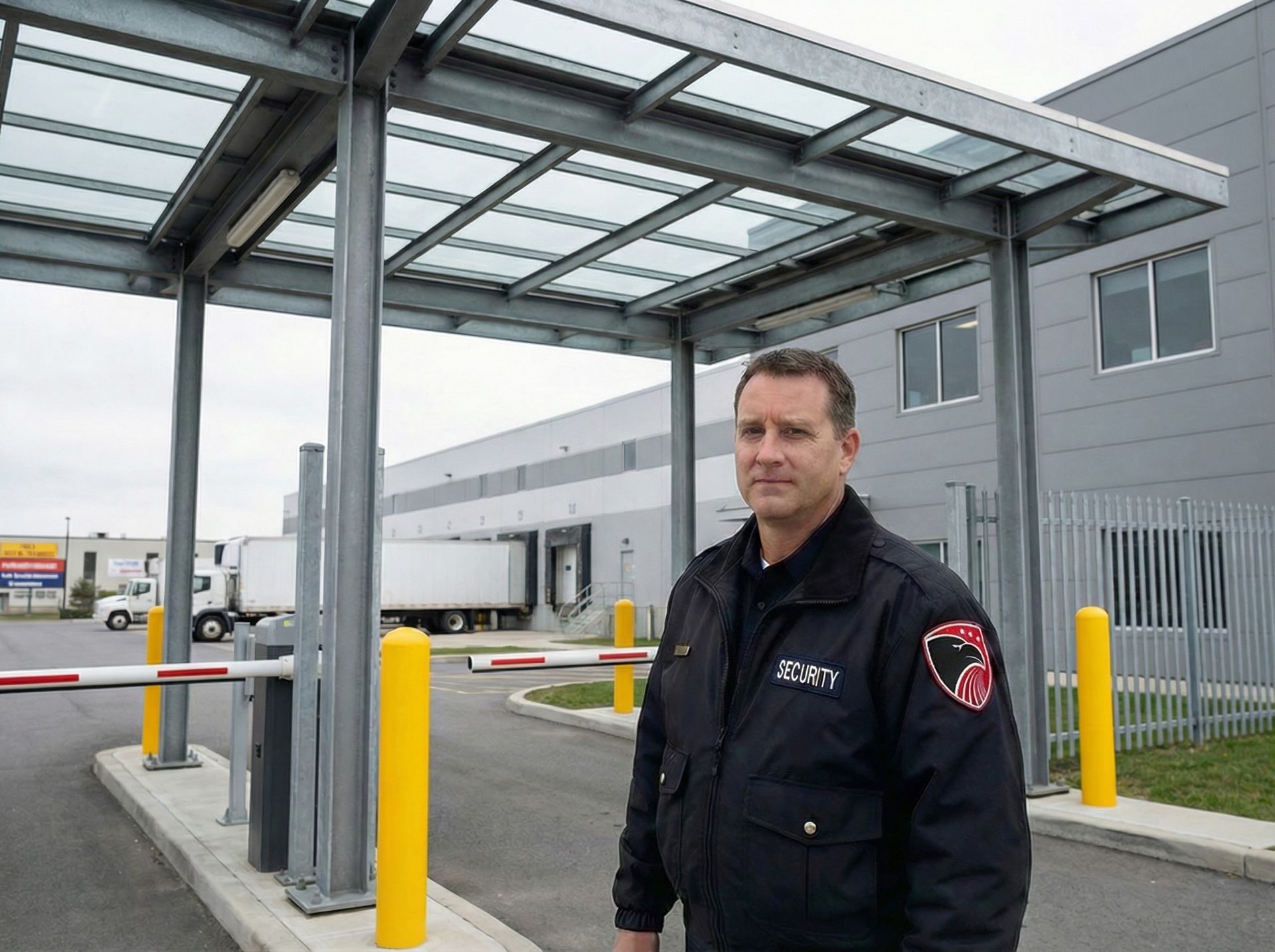
security servicesthat account for shift-change vulnerability windows. The highest-risk access periods are the 20 minutes before and after each shift change — when personnel flow is at its peak and verification can break down. A security program built around those moments specifically is more effective than one built around clock hours. SMP Security's unarmed guards start at $25/hour with a 4-hour minimum per shift.
Mobile Patrol and Perimeter Coverage
Large-footprint industrial facilities at Foundation Park often cannot justify full-time perimeter guards at every access point. Mobile patrol combined with
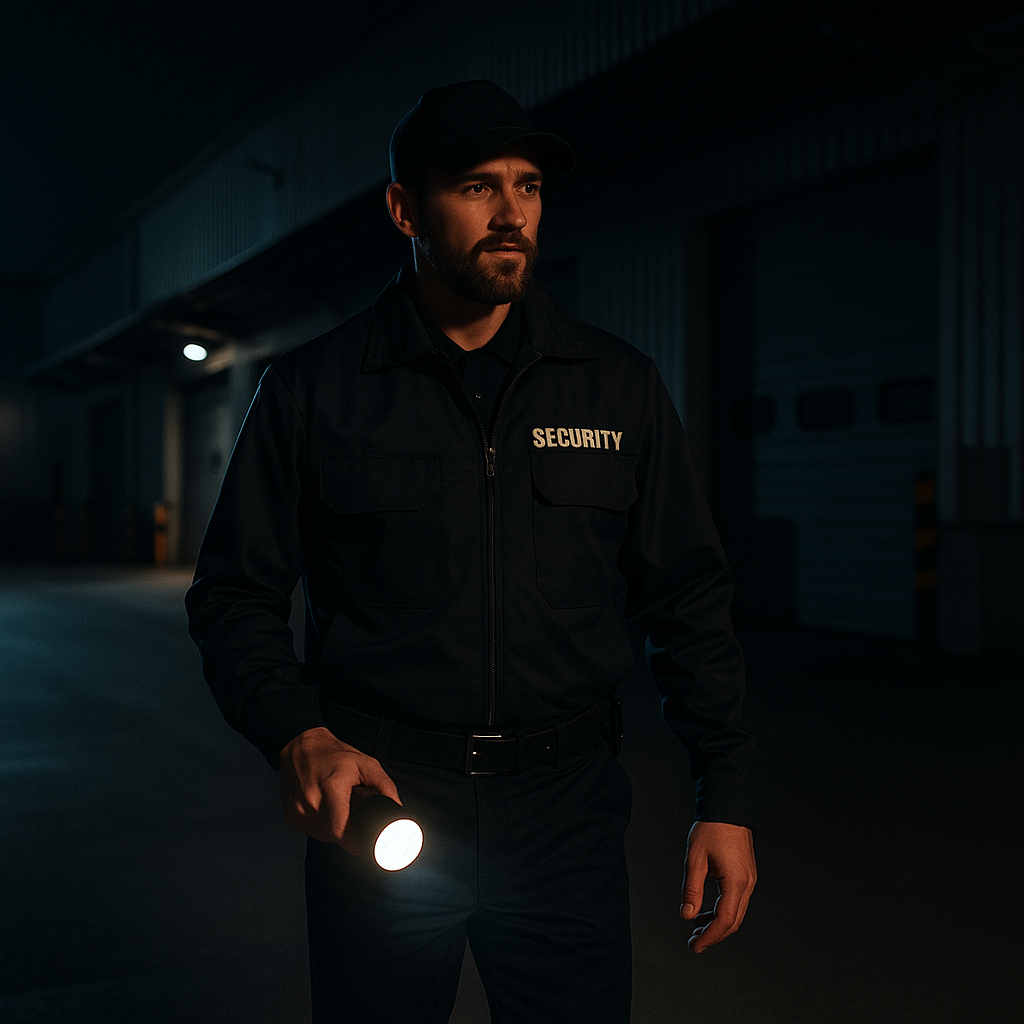
virtual guardingcloses that gap efficiently — SMP offers mobile patrol from $215/month for nightly service, with TrackTik patrol logs serving as compliance documentation. Every checkpoint is timestamped and logged automatically.
Incident Documentation and Reporting
From the first day of operations, your security vendor needs to be generating documentation that will hold up under FDA review or an insurance claim. TrackTik produces patrol logs, incident reports, and access records in a format that satisfies physical security documentation requirements. That paper trail has to start at day one — not after an incident triggers a review.
Foundation Park is moving fast
SMP Security is already engaged with tenants at the park — and the operators who have their security infrastructure in place before opening will be better positioned for every compliance review that follows.
Frequently Asked Questions
What security does a Foundation Park industrial facility need?
A.
Foundation Park industrial security in Sioux Falls typically includes zone-based access control, on-site guards for shift coverage, mobile patrol for large-perimeter areas, and CCTV monitoring. Food production tenants additionally require security documentation that satisfies FDA inspection standards — including TrackTik patrol logs and incident records from day one of operations.
How much does industrial security cost for a Foundation Park facility?
A.
Cost depends on facility size, number of shifts, and the mix of services. SMP Security's unarmed guards start at $25/hour with a 4-hour minimum per shift. Mobile patrol starts at $215/month for nightly service.
Virtual guarding starts at $150/month. Multi-site and long-term contracts are discounted. A
free assessment gives you a program and pricing specific to your Foundation Park layout.
Does SMP Security cover construction sites at Foundation Park?
A.
Yes. SMP Security covers active construction sites in Sioux Falls with a combination of mobile patrol, after-hours virtual guarding, and on-site personnel as needed. Construction site security is a specific program — not the same as operational facility coverage — and the transition between the two phases should be planned before groundbreaking, not after.
How soon should I contact a security vendor for a Foundation Park facility?
A.
Before your buildout is complete. Access control infrastructure is most efficiently installed during construction, not retrofitted afterward. Guard protocols and patrol routes should be tested during the ramp-up phase, not launched cold on opening day. Security vendor procurement conversations at Foundation Park are happening now — before site work is done.
How does SMP Security's TrackTik platform support Foundation Park tenant compliance requirements?
A.
SMP Security uses TrackTik for all patrol logging, incident reporting, and checkpoint management across Foundation Park and other Sioux Falls industrial clients. Every patrol round generates a timestamped, location-verified record automatically. For food production tenants subject to FDA inspection under FSMA, TrackTik records satisfy the physical security documentation requirements that inspectors look for during facility walkthroughs — including access logs, perimeter check records, and incident reports. This documentation is available from day one of operations, not only after an inspection is triggered.
What makes SMP Security qualified to serve Foundation Park's food production facilities specifically?
A.
SMP Security has operated in the Sioux Falls market for 70+ years and has direct experience with food production and industrial facilities in the Sioux Empire region. We understand FDA physical security documentation requirements under FSMA, zone-based access control specific to food production environments, and the shift-change vulnerability windows that are unique to multi-shift manufacturing operations. South Dakota has no mandatory guard licensing requirements, but SMP conducts rigorous internal training specifically calibrated to the compliance requirements of regulated industries — including food production, cannabis, banking, and healthcare. Foundation Park tenants can request a free
security assessment at (605) 334-9357 or smpsecurity.com/contact.
How does SMP Security coordinate security coverage during the construction-to-operations transition at Foundation Park?
A. SMP Security structures Foundation Park engagements in phases: construction site coverage (mobile patrol, after-hours virtual guarding, equipment protection), ramp-up coverage (guard deployment tested against full shift schedules, access control system commissioning, TrackTik patrol logging initiated), and full operational coverage (integrated guard, patrol, virtual guarding, and CCTV monitoring calibrated to the facility's specific threat profile). The transition between phases is managed without a coverage gap — documentation from construction carries forward into operational records, giving tenants a continuous audit trail from groundbreaking through production launch.