Sioux Falls Food Production Security: Guard & Compliance Guide
It's 6 a.m. on a Thursday and your facility gets an FDA notification: inspector on-site in 72 hours. You know your food safety procedures are solid. What you're less sure about is the physical security documentation — the access logs, the patrol records, the incident reports. That stack of paper is either airtight or it isn't, and you're about to find out.
This is the situation more Sioux Falls food manufacturers are facing as FDA increases its inspection frequency under FSMA. Food production security in Sioux Falls has moved from operational line item to compliance requirement — and the difference between those two things is whether your security program produces a verifiable paper trail or just a presence at the door. The Food Safety Modernization Act establishes documented physical security controls as a compliance requirement — not a best practice.
This guide covers what a FSMA-aligned security program actually looks like: the right guard type for your facility, access control, CCTV coverage, and the documentation standard that holds up when an inspector asks to see it.
What FSMA Actually Requires from Your Physical Security Program
Most plant managers understand FSMA in terms of food safety — hazard analysis, preventive controls, recall procedures. What gets less attention is the physical security component, and that's where documentation gaps tend to live.
FSMA Section 103 (Hazard Analysis and Risk-Based Preventive Controls) requires facilities to identify and mitigate physical hazards as part of their food safety plan. That includes unauthorized access to production areas, perimeter vulnerabilities, and any security failure that could create a food safety risk. Food production security in Sioux Falls facilities that can't produce a documented record of access controls, patrol activity, and incident response during an inspection are cited for compliance gaps — even if nothing bad ever happened on their watch.
The documentation standard matters as much as the security itself. A guard at the entrance who doesn't log anything is a presence, not a compliance asset. What FDA inspectors want to see is a timestamped, verifiable record: who entered regulated zones, when patrols ran, and how incidents were handled.
One thing worth knowing: South Dakota has no mandatory licensing requirements for security companies. That means two vendors can quote you the same service and operate to very different standards. SMP Security trains rigorously regardless of state requirements — including third-party certifications for firearms qualifications and specialized roles — because our food facility clients operate in an environment where guard conduct and reporting quality show up in audits.
The Security Risks That Are Specific to Food Facilities — and Why Generic Programs Miss Them
Most security programs are built around a simple model: control who enters the building, deter opportunistic theft, respond to incidents. That model works fine for a lot of commercial environments. It doesn't work for food manufacturing, because the risks inside a food plant aren't primarily about who walks in the front door.
The Problem Starts Inside
Ingredient theft and product diversion are insider problems. High-value inputs — specialty proteins, controlled additives, temperature-sensitive ingredients — are targeted by people who already have access. The financial loss is real, but the downstream consequences are worse: production disruptions, quality failures, and liability exposure if a compromised product moves into distribution. Controlling access to ingredient storage areas isn't a theft-prevention measure. It's a product integrity measure, and it needs to be treated as one.
One Access Failure Can Trigger a Recall
From there, the stakes escalate. When unauthorized personnel enter a food production zone — through an access control gap, a shift-change lapse, or a perimeter failure — the facility takes on contamination liability whether anything actually happened or not. A single documented access failure can require a voluntary recall and an FDA notification. The cost of that event, in product loss, regulatory response, and reputational damage, is orders of magnitude higher than any security program investment. What makes this risk manageable isn't just having a guard — it's having a documented, verifiable record that access to regulated areas was controlled at every shift, every day.
There's a Competitive Dimension Most Facilities Overlook
For Sioux Falls food manufacturers with proprietary formulations or production processes, insider access is also a competitive risk. Competitors and contract manufacturers have real financial incentives to acquire formulation data, and most facilities don't address this systematically until it surfaces as a legal problem. A security program that documents access to sensitive production areas closes this exposure at the same time it closes the compliance one.
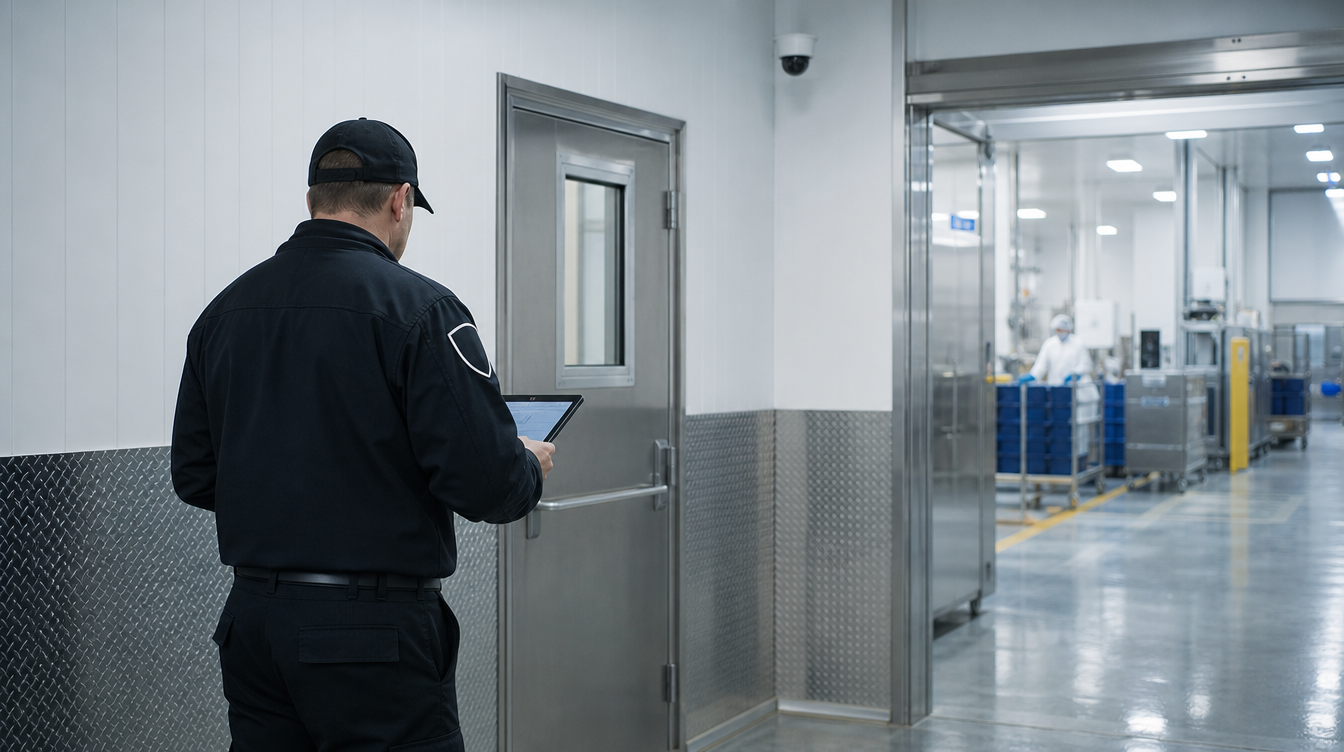
The thread connecting all three: a guard at the front entrance doesn't solve any of them. What these risks require is controlled access to specific production zones, documented entry and exit records at the zone level, CCTV coverage of storage and key production areas, and guards trained to recognize and report anomalies — not just check badges and fill a post.
Armed vs. Unarmed Guards for Food Production Security: How to Choose
The armed vs. unarmed decision comes up in every food facility security conversation, and the right answer depends on your specific risk profile — not a general rule. Here's how the tradeoffs break down for Sioux Falls food facilities:
Armed or unarmed, the right answer depends on your facility
Talk with an SMP Security expert and get a recommendation built around your layout and compliance needs.
Technology Integration: CCTV, Access Control, and TrackTik Reporting
A guard program without supporting technology leaves gaps that show up in audits. A complete
food production security program in Sioux Falls combines physical presence with three technology layers: CCTV monitoring, electronic access control, and documented patrol reporting.
For a closer look at access control, patrol documentation, and guard coverage inside a plant, see SMP Security's
food production security services in Sioux Falls.
CCTV Monitoring and Virtual Guarding
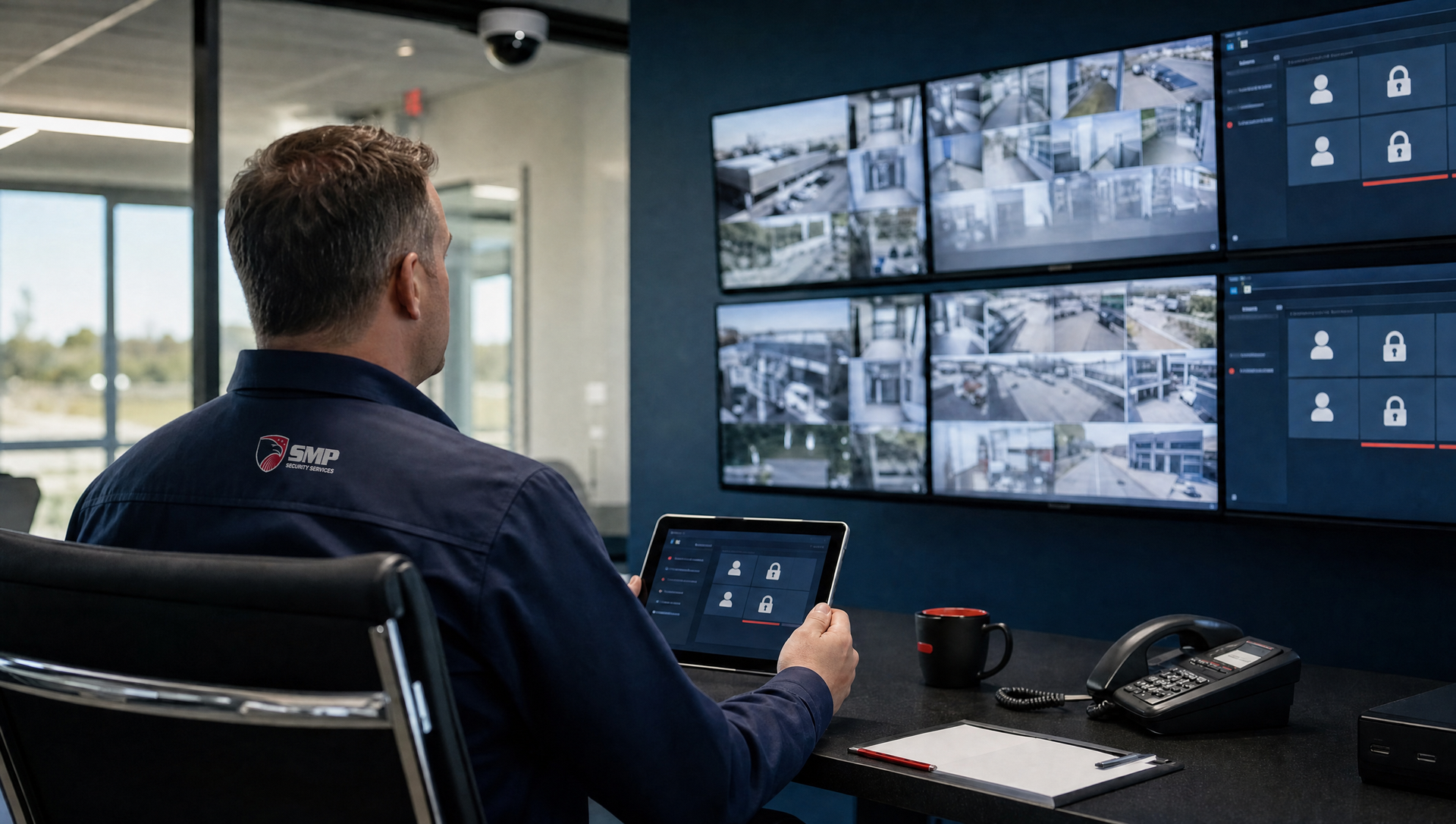
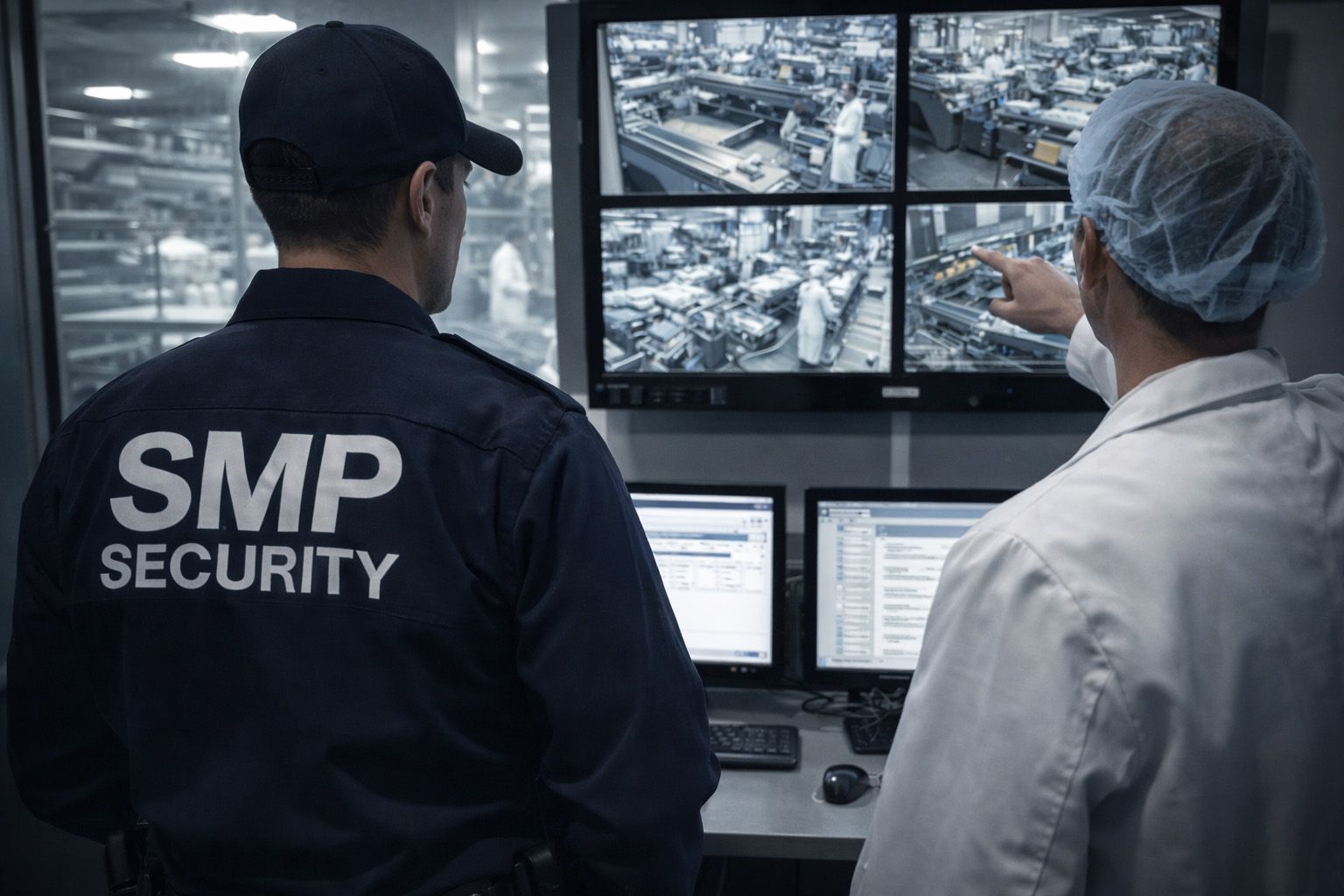
SMP Security installs and monitors CCTV for food facility entrances, production floor perimeters, loading docks, and cold storage areas. Virtual guarding — remote operators watching live feeds and flagging incidents in real time — fills the coverage gaps that exist between patrol rounds. For large-footprint Sioux Falls food facilities running multi-shift operations, virtual guarding at $150/month is often the most cost-effective way to maintain continuous coverage without additional on-site staff.
Access Control Systems
Electronic access control limits entry to FDA-regulated production zones to credentialed personnel only. Every access event is timestamped and logged — which is exactly the record FDA inspectors look for when reviewing FSMA compliance. SMP installs and monitors access control systems with a $10,000+ install minimum, plus a recurring service and monitoring agreement.
TrackTik Patrol Reporting
Here's the practical problem most Sioux Falls food facilities have with patrol documentation: the records exist, but they don't hold up. A guard sign-in sheet isn't verifiable. A handwritten log doesn't timestamp to the minute. A spreadsheet updated at the end of a shift isn't a contemporaneous record. When an FDA inspector asks for physical security documentation, what they're looking for is evidence that can't be reconstructed after the fact.
Every
mobile patrol
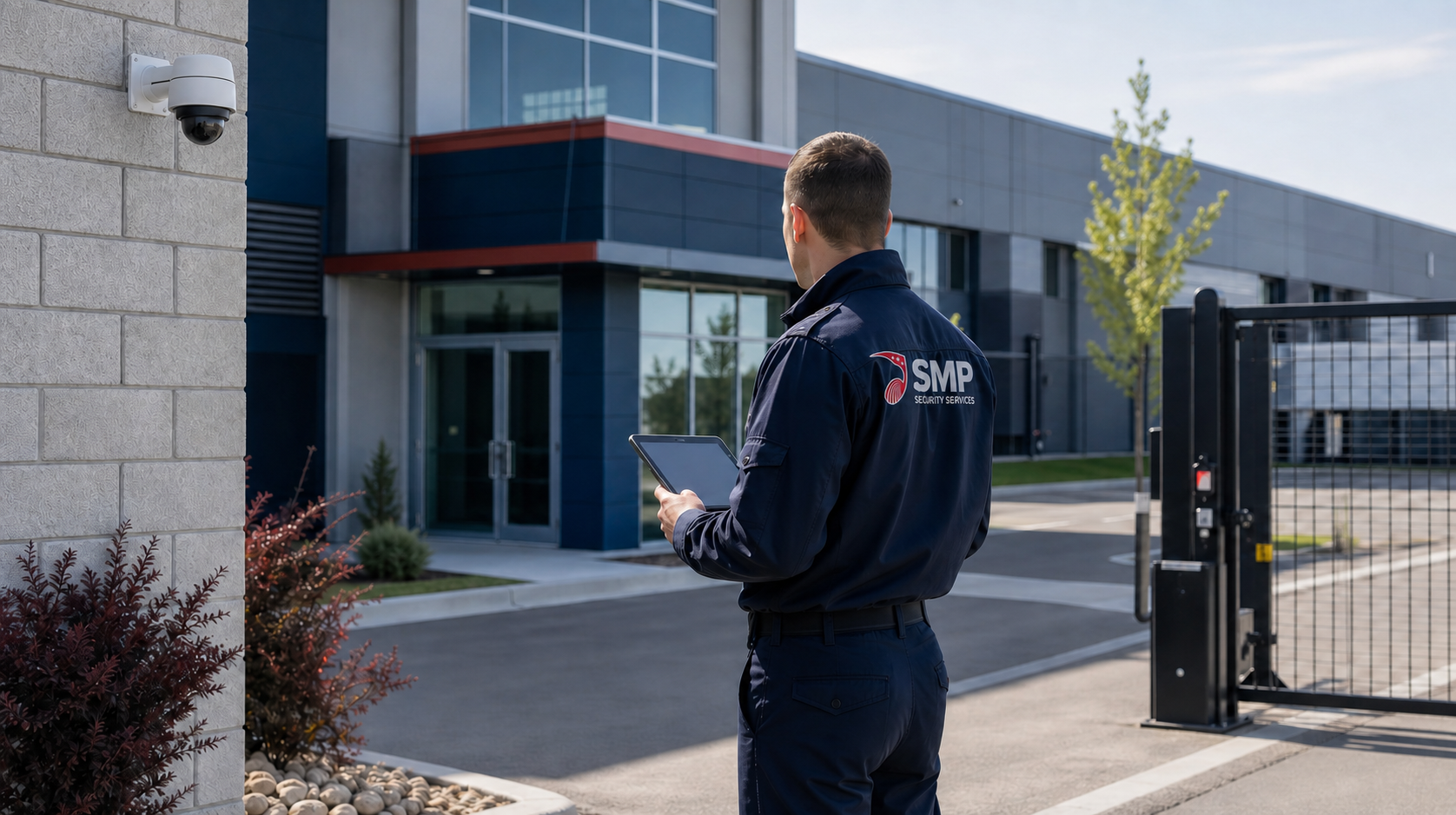
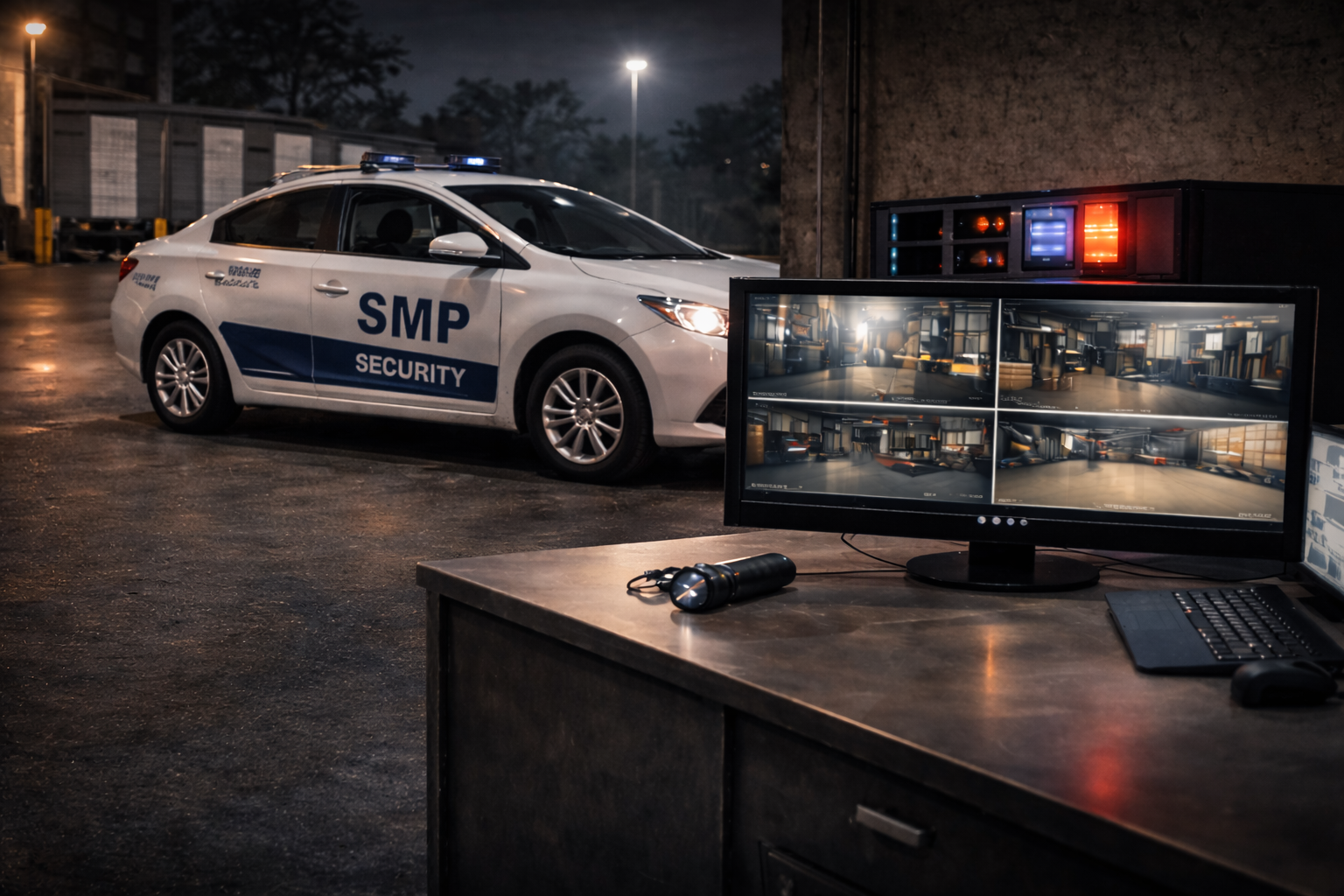
SMP Security runs uses TrackTik for checkpoint logging and incident reporting. Each patrol stop is scanned and timestamped in real time. Each incident generates a structured report tied to a specific location and guard ID. The output is a complete, verifiable patrol record — the kind of documentation that answers an inspector's questions without requiring you to explain or reconstruct anything. For
food production security in Sioux Falls, that's the difference between a security program and an audit-ready security program. Patrol vehicles also carry dash cameras with remote video monitoring, adding a second verification layer for perimeter activity.
Our next FDA inspection will either confirm your security program is audit-ready — or expose the gap
SMP Security offers free on-site assessments for Sioux Falls food facilities. Let's make sure you're ready.
Why Local Security Coverage Matters in the Sioux Falls Food Market
The Sioux Falls area is in the middle of a significant food and ag manufacturing expansion. Smithfield Foods announced a $1.3 billion processing facility at Foundation Park in February 2026 — site work begins this spring. CJ Foods is already under construction there with a $550 million frozen-food plant. That growth, layered on top of the region's existing meat processing, grain handling, and food packaging operations, makes
food production security in Sioux Falls
a more competitive and more complex operational environment than it was five years ago.
National security chains can quote this market. What they can't offer is 70+ years of local presence, deployment times that don't factor in regional logistics, and a team that already knows the Sioux Empire's industrial footprint. SMP Security covers a 150-mile radius from Sioux Falls and serves food, ag, manufacturing, energy, and government clients across that footprint. When something happens at 2 a.m., local matters.
Frequently Asked Questions: Food Production Security in Sioux Falls
How much does a security guard cost per hour in Sioux Falls?
A. Unarmed security guards in Sioux Falls start at $25 per hour through SMP Security, with a 4-hour minimum per shift. Armed guards are quoted based on hours, required certifications, and shift times. Long-term contracts of 168+ hours per week receive preferred pricing. For a facility-specific quote, SMP Security offers free on-site security assessments with no obligation.
Do food manufacturing plants need security guards?
A. Yes — and FSMA makes it a compliance requirement, not just an operational choice. Food manufacturers under FSMA Section 103 must document physical security controls as part of their food safety plan. FDA inspectors review access logs, patrol records, and incident documentation during facility walkthroughs. A food plant without a documented security program has a compliance exposure regardless of how strong its food safety procedures are.
What does a food facility security assessment include?
A. A food facility security assessment from SMP Security covers: a walkthrough of all entry points, production zones, storage areas, and perimeter; review of existing access control and CCTV coverage; identification of shift-change and documentation gaps; and a written recommendation covering guard type, patrol structure, technology needs, and estimated pricing. Assessments are free and available for Sioux Falls food facilities within a 150-mile radius.
How much does mobile patrol security cost per month?
A. Mobile patrol security for Sioux Falls food facilities starts at $215 per month through SMP Security. Virtual guarding — remote operators monitoring live CCTV feeds — starts at $150 per month. Many facilities combine both for cost-effective perimeter coverage across multi-shift operations. Pricing varies based on facility size, patrol frequency, and contract length.
What does FSMA require from a food facility's physical security program?
A. FSMA Section 103 (Hazard Analysis and Risk-Based Preventive Controls) requires food manufacturers to identify and mitigate physical hazards as part of their food safety plan. For physical security, that means documented controls for unauthorized access to production areas, verifiable patrol records, and incident documentation. FDA inspectors look for timestamped, contemporaneous records — not reconstructed logs or informal sign-in sheets. Facilities that cannot produce this documentation during an inspection are cited for compliance gaps even if no security incident ever occurred.
What is the difference between armed and unarmed security guards for food plants?
A. Armed guards provide higher deterrence and are typically deployed at high-value ingredient storage areas, FDA-regulated access zones, or facilities with prior security incidents. Unarmed guards are appropriate for general perimeter monitoring, shift-change management, and standard production floor access — particularly when paired with electronic access control and CCTV. For FSMA compliance purposes, either guard type satisfies documentation requirements when paired with TrackTik timestamped patrol reporting. The right choice depends on the facility's specific risk profile, not a general rule.
Does South Dakota require security companies to be licensed?
A. South Dakota has no mandatory state licensing requirements for security companies. This means two vendors can quote identical services and operate to very different training standards. SMP Security trains to a high internal standard regardless of state requirements, including third-party certifications for firearms qualifications and specialized roles. For food facility clients operating in a regulated environment, the training standards and documentation discipline of a security vendor directly affect audit outcomes.
Learn more about warehouse security guards in Sioux Falls